Scripture: Then the Pharisees went and plotted how to entangle him in his words. And they sent their disciples to him, along with the Herodians, saying, “Teacher, we know that you are true and teach the way of God truthfully, and you do not care about anyone’s opinion, for you are not swayed by appearances. Tell us, then, what you think. Is it lawful to pay taxes to Caesar, or not?” But Jesus, aware of their malice, said, “Why put me to the test, you hypocrites? Show me the coin for the tax.” And they brought him a denarius. And Jesus said to them, “Whose likeness and inscription is this?” They said, “Caesar’s.” Then he said to them, “Therefore render to Caesar the things that are Caesar’s, and to God the things that are God’s.” When they heard it, they marveled. And they left him and went away.
Matthew 22:15-22 ESV
[Click here to read the entire chapter.]
Observation: Recapping Friday’s Daily Focus, this last of the three parables aimed at the Sanhedrin (governing leadership of the Pharisees and Sadducees) likens a wedding-feast motif to that of the kingdom of heaven. The king (Jesus) sends his servants (the prophets) to call those invited to the celebration, but they all reject the offer, and some even humiliate and kill the king’s servants. Angered, the king sends his troops, slaughters these wicked subjects, and razes their cities. So he instructs other servants to go to the main roads and invite the strays and the stragglers to come and enjoy the celebration, which they do. During the feast, the king sees a man with no wedding garment and questions how he gained access. When the man did not respond, the king ordered his attendants to bind the man and cast him into the “outer darkness” of unbearable suffering (hell). Jesus then concludes with a poignant editorial remark, “For many are called, but few are chosen.”
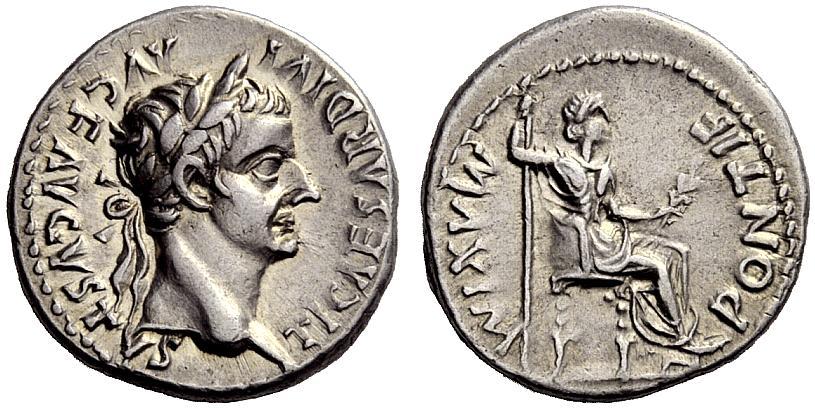
Today’s reading (which continues in the temple courts on the Tuesday of Passion Week) involves yet another scheme of the Pharisees to entrap and incriminate Jesus as a Jewish or Roman law violator. Insincerely addressing Jesus as a true teacher of the law unswayed by opinions or appearances (which is the truth but insincere), they ask his thoughts on whether it is lawful to pay taxes to Caesar (implying that doing so would breach Levitical law). Jesus, discerning their intent, calls them out as hypocrites and orders them to show him a denarius. He then questions them regarding whose likeness is on the coin. They rightly answer that it is “Caesar’s.” As such, Jesus advises them to give Caesar what belongs to him and do likewise to God. The representatives of the Pharisees and Herodians are amazed and nonplussed by Jesus’ shrewd response. So they leave the temple to go and report what transpired to their leaders.
Takeaway: Mark (12:13-17) and Luke (20:20-26) also chronicle this confrontation regarding paying taxes. The tax would be either the annual head tax or the periodic poll tax. Either way, the envoy’s scheme, if succeeded, would place Jesus in jeopardy of either violating Roman law warranting capital punishment (a “no” response) or in disfavor with his people, who were exhausted with trying to make ends meet under Rome’s staggering tax rate at approximately 50% (a “yes” response). And a Jew would typically pay the government tax in Roman currency. Hence, Jesus asks for a denarius that bears the image of the emperor’s head with the inscription: “Tiberius Caesar, son of the divine Augustus” on one side and “pontifex maximus” on the other. The Latin inscription would translate as “high priest,” indicating Caesar is not only divine but the head of all religious faiths within his empire—an anathema to any devout Jew. But using the coin as a visual aid, Jesus turns their interrogation on its head and sets the Pharisees and Herodians’ representatives on their heels.
Our takeaway? As theologian Michael Wilkins contends, behind Jesus’ response is a clarification of his kingdom and civil-government hierarchy: “His kingdom is revolutionary, but until he returns in glory, the kingdom will operate within the existing political order. [Thus,] those who have responded to the invitation to the kingdom of heaven will continue to have obligations to governing authorities of this world” (NIV Application Commentary: Matthew, p.721). Paul (Romans 13:1-7) and Peter (1 Peter 2:13-17) speak to this as well.
Our part? How do we apply Jesus’ command to give the government what is rightfully theirs and to God what belongs to him? Again, Wilkins sums it up well, “God as Creator has sovereign right over all creation and everything in it. We are to pattern our lives in such a way that we show we are God’s stewards of all he has created, and we are to use what is his in the way he has designed it to be used. This implies that even what belongs to Caesar is only his in a secondary way. Allegiance to God takes precedence over allegiance to Caesar” (pp.721-722). So, even when government leaders become corrupt and attempt to set themselves above God, we can count on our Lord to remove them in due time, as he did Herod (Acts 12:20-25) and Hitler.
Prayer: Father God, we thank you for your Son, who modeled godly stewardship for us. Still, many of us struggle to pay taxes without fudging or grumbling. So, please help us submit to your Holy Spirit to mature our understanding of stewardship, where we fully pay what we owe to our governments under your headship and use all other resources as you designed and intended to grow your kingdom and glorify your name. Amen.
Rev. Gordon Green, M.Div., M.A. Counseling

Leave a Reply